In my portfolio, I intend to have stories that share a common theme, such as sacrifice or duty. In stories such as the Ramayana, these concepts are considered important to the cohesion of society. Those who have sacrificed themselves or who have followed their duty are praised, while those who are greedy are presented in a negative light.
Index
The Celestial Weapons
After they help Rama fight a horde of rakshasas, some of the celestial weapons feel as though the prince hasn't given them the credit they are due.
Hanuman and the Curse
After the events of the Ramayana, Hanuman gets himself into all kinds of trouble.
The Elephant and the Dog
An elephant and a dog become best friends but are torn apart by war.
The Tortoise and the Heron
A tortoise promises to save his subjects from an impending drought.
The Bear and the Bees
A bear must make an important decision.
Showing posts with label Portfolio. Show all posts
Showing posts with label Portfolio. Show all posts
Monday, November 21, 2016

The Bear and the Bees
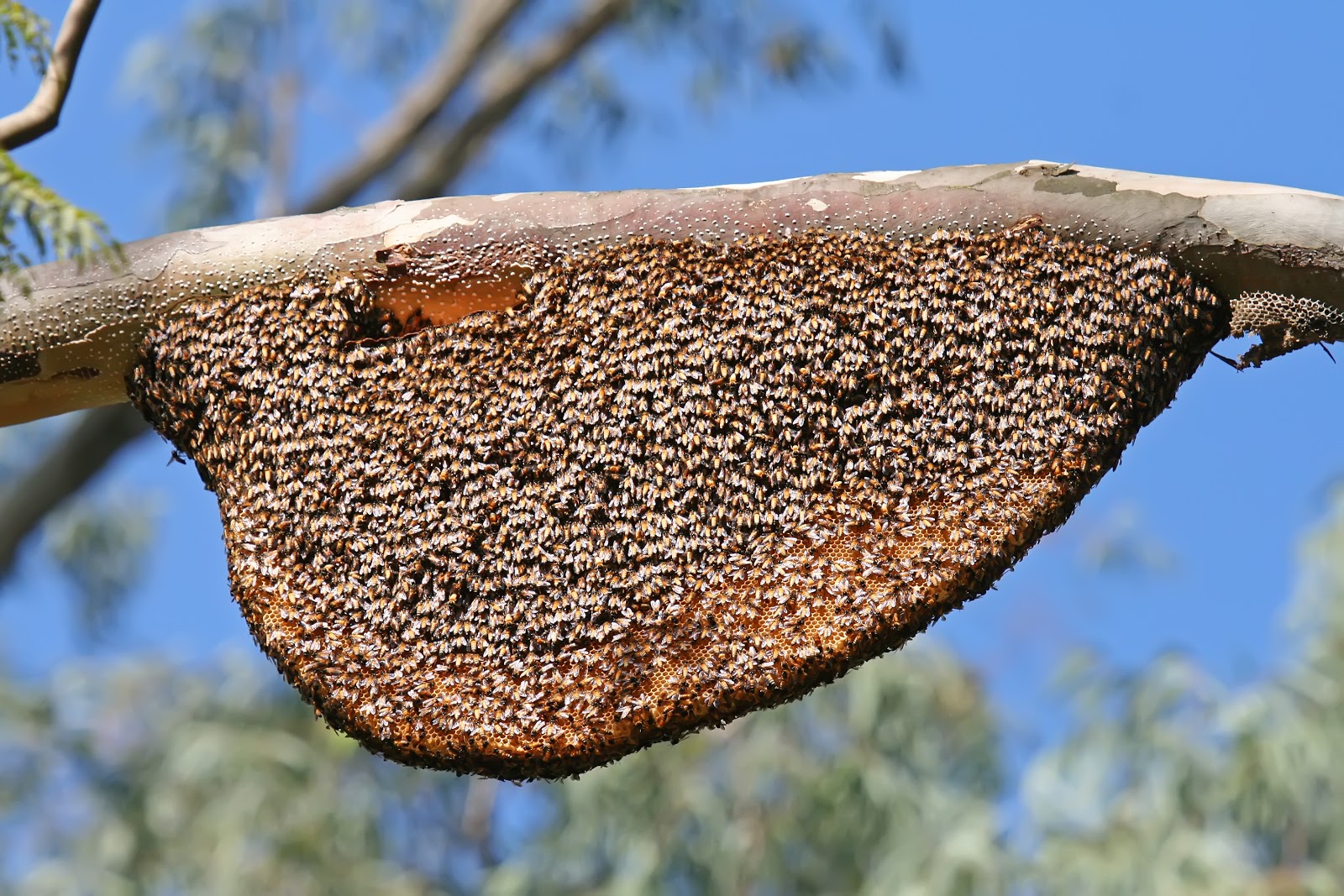

Photograph by Muhammad Mahdi Karim (2012).
A long time ago, two brothers were arguing over whether they should sell their calf. The eldest brother wanted to keep the calf in order to get milk from it, while the youngest brother wanted to sell it now. It was a very fat cow. It could make a lot of milk or a lot of meat. So the two brothers argued and argued. One day, while they were standing out in their field arguing, a brahman wandered by.
Thinking that the wise man could provide them with the answer, they pleaded with him. “Oh, wise brahman, please tell us whether we should sell our cow or keep it.”
The brahman didn’t give them a straight answer, but began this story:
One day, a bear was walking in the jungle when he encountered a cat. The cat was trying to climb a tree in order to reach a beehive which hung on the highest branch. Every few seconds, a bee would swoop down and sting the cat. At this, the cat would fall back down. Even after a dozen stings, the cat still tried to climb the tree.
So distracted was the cat by her activity that she didn’t even notice the bear approaching her. The bear was rather bored and decided to play with this cat. He took his great paw and swiped at the cat. This certainly got the feline’s attention.
“What are you doing?" the cat shouted at the bear. "Are you trying to kill me?”
“No,” the bear replied, dejectedly, “I was only trying to play. I’m so bored and there’s nothing else to do.”
“Bored, eh?” The cat began to think of a plan by which to get the honey in that beehive. She didn’t think much of the bear’s intelligence and assumed he would do anything he was told. “I know something you can do,” the cat said.
“What is it?” asked the bear.
“You can climb this tree and get the beehive for me.”
“Why do you want to get the beehive?”
“It’s filled with a sweet golden goo.”
“That sounds tasty,” the bear said, licking his lips.
“It certainly is.”
“Can I have some if I help you get it down?”
The cat hadn’t expected this, but half of the honey was better than nothing at all. “Alright,” she said. “We’ll split the honey once you knock it off the tree.”
The bear started to climb and soon reached the top branch. The bees by then had lost all of their soldiers. Only the queen, her advisors, and the workers remained. When the bear started crawling across the branch in order to reach the beehive, he heard a tiny buzzing in his ear. He swatted by his ear but the buzzing resumed soon after. This buzzing almost sounded like speech. He listened more closely and could actually make out something.
“Bear, you must help us!” they cried.
Befuddled, the bear asked, “Who’s talking?”
“I am the queen of this hive. We are in dire straits. We have lost all of our soldiers and our hive is completely defenseless.”
“What would you have me do about it? I am only a bear.”
“You can guard us from other animals. You are big and strong and no animal would dare challenge you.”
“What about the cat? She asked me to knock your hive down so that she and I could split the honey inside.”
“If you do that, you will only get honey once. If you defend us, we will give you honey each day.”
“Will I get more honey that way?” the bear asked, even more confused than before.
“Yes, you will, in the long run.”
At this point, the cat had grown impatient. She yelled, “What’s going on up there?”
“Nothing,” the bear replied. “I’m almost there.”
The queen bee said to the bear, “First, we need you to scare off the cat. She will probably take the hive for herself while you’re still in the tree.”
“I don’t think so," the bear said. "She seems trustworthy to me.”
“She’s not trustworthy at all,” replied the queen bee. The royal advisors, who had gathered around her, agreed with this statement.
The bear wasn’t so convinced. In fact, he was rather angered by this statement. He took his great paw and swiped at the hive. It was now hanging by a thread. He swiped again and the whole thing came crashing down.
“Oh no,” the bear cried, his eyes filling with tears. “What have I done?”
The cat said to him, “You’ve gotten me a great deal of honey!” With that, the feline took the hive in her mouth and ran off.
The bear knew he should have listened to the queen bee. Had he been more patient and level-headed, he could have gotten honey each day. Now, he had nothing at all.
After hearing the story, the men decided that it would be best to keep the cow. They thanked the brahman, who went on his way. For many years, the cow and its offspring gave these brothers and their families as much milk as they could drink.
Author’s Note
I didn’t have a specific story in mind when I was writing this. It’s in the style of the Fables of Bidpai. That is, the characters are all animals and a moral lesson is provided at the very end. Of course, there’s a trickster character, the cat, who misleads the protagonist, the bear. I considered having the bear act as a defender of the bees for some time before realizing he could have the honey all at once. However, this story seems to work better in that the bear doesn’t come to this realization but rather is tricked into knocking the beehive down. Either way, he learns a lesson about patience and not acting rashly.
I added a frame story in order to make the moral more clear. It’s no longer just about a bear who’s tricked by a cat, but about two brothers who must make an important decision regarding their cow.
Bibliography
Friday, November 11, 2016
Portfolio Introduction
In my portfolio, I intend to have stories that share a common theme, such as sacrifice or duty. In stories such as the Ramayana, these concepts are considered important to the cohesion of society. Those who have sacrificed themselves or who have followed their duty are praised, while those who are greedy are presented in a negative light.
Index
The Celestial Weapons
After they help Rama fight a horde of rakshasas, some of the celestial weapons feel as though the prince hasn't given them the credit they are due.
Hanuman and the Curse
After the events of the Ramayana, Hanuman gets himself into all kinds of trouble.
The Elephant and the Dog
An elephant and a dog become best friends but are torn apart by war.
The Tortoise and the Heron
A tortoise promises to save his subjects from an impending drought.
Index
The Celestial Weapons
After they help Rama fight a horde of rakshasas, some of the celestial weapons feel as though the prince hasn't given them the credit they are due.
Hanuman and the Curse
After the events of the Ramayana, Hanuman gets himself into all kinds of trouble.
The Elephant and the Dog
An elephant and a dog become best friends but are torn apart by war.
The Tortoise and the Heron
A tortoise promises to save his subjects from an impending drought.
Friday, November 4, 2016
The Tortoise and the Heron
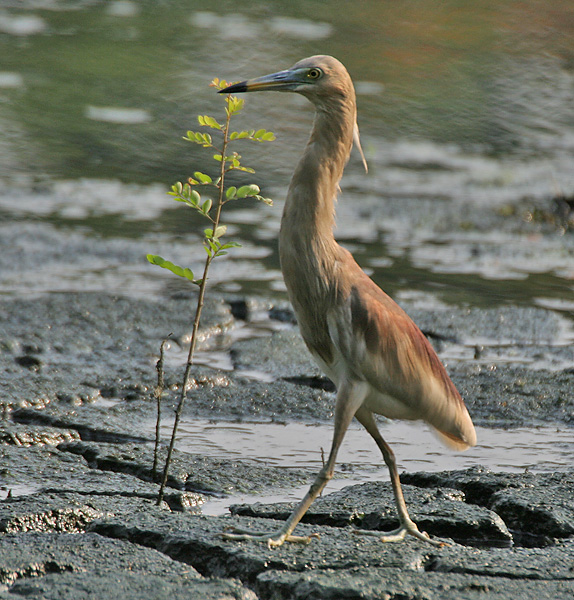
An Indian pond heron. Photography by J.M Garg (2007).
_in_Breeding_plumage_walking_cautiously_in_Kolkata_I_IMG_7936.jpg)
Many, many years ago, there was a great big pond in the middle of a jungle. This pond was fed by a wide stream which swept down from the mountains. It bubbled and gurgled all day, providing a never-ending source of freshwater. The land around the pond was remarkably fertile and all kinds of things were able to grow in that little shaded pond.
Of all those animals which lived in the pond, the oldest and most-revered of them was the tortoise. He had been there far longer than anyone else. In fact, he had been there so long that he couldn’t remember when he had first come across the pond. He might have always lived here, but he couldn't say for sure. So wise did he seem to the other animals that they treated him as a god-king. They thought he could commune with the other gods and ask for favors. All they had to do for him was bring him enough food each day.
During one particularly hot summer, the stream which fed this pond started to dwindle. After a few weeks, the stream dried up completely and all that could be seen was the rocky bed. Pretty soon, the pond itself began to dry up. All of the animals were frightened. Of those animals which lived in the water, the fishes were the most frightened. They cried out to the tortoise, expecting him to have some wise plan. Surely he had seen days such as this, when there wasn’t enough rain to sustain the pond. Perhaps he knew how to bring the water back. Perhaps he could call upon the gods and ask them for more rain.
“Oh, wise tortoise!” the fish cried. “Why has the stream dried up? Please help restore it! If you don’t, we are sure to die.”
The tortoise thought that he could only restore the pond if he had his strength up. He cleared his ancient throat and said to the fish, “It has dried up because not enough of you have brought me the choicest plants. Go forth! Bring back the best herbage and I shall restore our pond.”
All of the little animals, not just the fish, helped find the choicest plants for their tortoise. When they brought the herbage back, he made quick work of it. He then told them to bring back some ripe, juicy berries. They did this and he ate the fruit even more quickly than he did the plants. He continued to demand even more food. The animals did as he said. Eventually, the tortoise ate everything that hadn’t dried up for lack of water.
The tortoise still demanded food, but those few remaining animals (so many having perished of hunger) told him there was nothing left. Given these circumstances, he decided now would be the best time to perform his rituals. He called for all of the pond’s inhabitants to gather at his part of the pond. Among those animals who attended were bush frogs, newts, caecilians, eels, and halfbeaks.
He performed several rituals in order to restore the pond, but nothing worked. No matter how fervently he performed these rituals, no rain came down, the pond remained low, and the stream stayed dry. He soon realized how powerless he was.
One day, while the tortoise sat despairing on his log, a heron appeared at the pond. She asked him what was wrong.
"I have tried to restore this pond and the stream which fed it, but nothing has worked. There's nothing for us to eat and my subjects are dwindling to nothing."
"I suspected as much when I flew over," the heron said. "I could help you and your subjects."
"How?"
"I know of another pond not too far from here," said the heron.
“Really?”
“I could take you and your subjects there. You would only have to climb in my beak.”
“How can I be sure you won’t eat all of us?”
“Why would I do that? I have seen how desperate you and your subjects are, so I must help you. It is my duty as your fellow animal.”
The tortoise agreed, but on the condition that he would stay behind until the last animal had been moved. He would help coordinate this exodus.
The tortoise gathered all of the animals and told them what was to be done. They were concerned at first about the heron eating them, but he told them of that bird's promise. The next day, all of the halfbeaks gathered in little groups, as did the frogs, the newts, the eels, and all of the other pond animals.
Once the animals had gathered together, the crane picked each group up one by one. But the heron had no intention of saving them. After picking up the fish and flying out of the sight of the old pond, she gulped them down. She flew back and forth several times, swallowing the fish each time, before it was the tortoise’s turn.
As the heron flew off towards “the new pond,” the tortoise looked down and saw all of the brilliant white fish bones scattered in the fields. He cried out and the heron tried to gulp him up. Unfortunately for the heron, the tortoise was too big to swallow in one gulp. The bird then tried to get the tortoise out of her mouth, but he bit her tongue and held on tight. Hoping the tortoise would get out if she landed, the heron stopped by a small pond. But before the tortoise left, he made sure to bite off the heron’s tongue.
“Both you and I have uttered untruths and have caused the deaths of many animals. Of that, we are both guilty. But while I thought I was helping, you only thought of our belly. You deceived us. For that, you are to be cursed for the rest of your days." With this, the tortoise snapped off the heron's tongue. "No longer will you have a tongue with which to deceive others!”
The tortoise climbed into the new pond and swam away. The heron flew off, angry with herself that she had been so thoroughly deceitful to the tortoise and the fish.
Author’s Note
This story is a combination of two folk tales from Dutton’s Fables of Bidpai: “The Tortoise and the Geese” and “The Crane and the Crab.” However, most of the story is derived from the "The Crane and the Crab," in that this story involves a bird taking another animal to "safety." In addition, the animal being carried sees evidence of the bird's deceitfulness and managed to escape. In "The Tortoise and the Geese," the creature being carried eventually becomes angry with the bird and drops to the earth. Rather than killing the tortoise, I thought it would be better if I let him redeem himself and teach a lesson to the heron. While the tortoise does deceive his subjects in a way, he does so unwittingly. He truly does think himself a sort of god-king who can bring back the water by performing rituals. The heron, on the other hand, knows full well that she is deceiving the creatures. While the tortoise has lost his friends for his deception, he is otherwise unscathed. The heron, on the other hand, must go through life with a physical sign of her deception.
Bibliography
Thursday, October 20, 2016
Portfolio Introduction
In my portfolio, I intend to have stories that share a common theme, such as sacrifice or duty. In stories such as the Ramayana, these concepts are considered important to the cohesion of society. Those who have sacrificed themselves or who have followed their duty are praised, while those who are greedy are presented in a negative light.
Index
The Celestial Weapons
After they help Rama fight a horde of rakshasas, some of the celestial weapons feel as though the prince hasn't given them the credit they are due.
Hanuman and the Curse
After the events of the Ramayana, Hanuman gets himself into all kinds of trouble.
The Elephant and the Dog
An elephant and a dog become best friends but are torn apart by war.
Index
The Celestial Weapons
After they help Rama fight a horde of rakshasas, some of the celestial weapons feel as though the prince hasn't given them the credit they are due.
Hanuman and the Curse
After the events of the Ramayana, Hanuman gets himself into all kinds of trouble.
The Elephant and the Dog
An elephant and a dog become best friends but are torn apart by war.
The Elephant and the Dog
 x
x
The elephant is reunited with the dog.
In a mountain temple in northern India, the Brethren were all seated before the mountain temple, talking amongst themselves. They had fasted for several days and were waiting for the Master to appear, so that he may impart some of his wisdom to them. They were now talking about a pair of farmers who, although not related, were very good friends. They had been friends since childhood and never seemed to argue. Whenever one of them fell on bad times, the other would help him.z
When the Master finally appeared, he asked the Brethren what they had been talking about. They told him of these two farmers, who lived in a village at the foot of the mountains.
The Master said to them, "They have been friends for a long, long time, and in many different ages. Although I could tell you the story of every age of their friendship, I will tell you perhaps the most important one."
Thus did the Master begin this tale:
Once upon a time in India, the king had mile-long stable of elephants. There were dozens of elephants. They lived an extraordinarily relaxed life. They had a wise and diplomatic king, so their country never experienced war. All they did most days was eat hay and grass and play tricks on one another. It was a happy life.
When the Master finally appeared, he asked the Brethren what they had been talking about. They told him of these two farmers, who lived in a village at the foot of the mountains.
The Master said to them, "They have been friends for a long, long time, and in many different ages. Although I could tell you the story of every age of their friendship, I will tell you perhaps the most important one."
Thus did the Master begin this tale:
Once upon a time in India, the king had mile-long stable of elephants. There were dozens of elephants. They lived an extraordinarily relaxed life. They had a wise and diplomatic king, so their country never experienced war. All they did most days was eat hay and grass and play tricks on one another. It was a happy life.
During the monsoon season, a soaking wet dog crept into the elephant stable. All of the elephants were afraid of the dog. He had sharp teeth and looked just like a wolf. Only one elephant didn’t panic when she saw the dog. This pachyderm was more intrigued by the dog than afraid of him. She went up to the dog and asked him what his name was.
“I am Rama,” he replied, shivering, obviously afraid of the huge creatures which stood in the stable. Rama thought he would be eaten.
"Rama?"
"I spent a lot of time exploring the forest as a puppy, so my pack gave me that nickname."
The elephant, being very bright, could tell that he was afraid and tired. She said to him, "My name's Hanumana, because I liked playing tricks on my brothers and sisters. Don’t be afraid. We are all vegetarians here. I’ll talk to my friends and tell them that you are a friend.”
"Rama?"
"I spent a lot of time exploring the forest as a puppy, so my pack gave me that nickname."
The elephant, being very bright, could tell that he was afraid and tired. She said to him, "My name's Hanumana, because I liked playing tricks on my brothers and sisters. Don’t be afraid. We are all vegetarians here. I’ll talk to my friends and tell them that you are a friend.”
Rama thanked her profusely.
In time the dog and the elephant became great friends. The dog slept in the elephant stable every night and they played games together every day.
One day, a farmer saw the dog by the stables and asked the elephant-keeper whether he could buy the dog. The elephant-keeper didn’t like the dog, thinking he would spread fleas to the king’s elephants, so the elephant-keeper sold the dog to the farmer for only a few rupees. Hanumana became very sad. She barely ate and barely slept.
Soon after, a war started between the king of India and the king of Hindia, a neighboring country. Soon all of the elephants were sent into battle. This was the first time Hanumana had been to war and she was extraordinarily frightened. When she arrived at the front, she saw all of the dead bodies and the dying men being carried in carts. Hanumana only wanted to go home. She had seen enough of this war.
As it turned out, Rama had been depressed since having been sold and refused to do any work. Because of this, the farmer had sold Rama to the army of Hindia.
On the second day of the battle, the elephant was walking across the field when she spied a great pack of dogs running towards her. The elephant reared up, ready to smash the dogs, not because she wanted to, but because she didn’t want the king, who was riding on her back, to be hurt.
Rama was the leader of this pack and recognized the elephant. He stopped and so did the dogs following him.
"What's wrong, captain?" one of the dogs asked.
Rama replied, "This elephant and I were good friends many years ago. I cannot fight against someone who has been so dear to me for so long."
The kings of both sides saw these animals talking and were befuddled.
The chief advisor of the king of India said to his ruler, "Truly this a miracle. If these two animals, who have been trained to kill each other, can become friends, surely you and the king of Hindia can become friends."
"You are wise," the king replied, "but why should we learn lessons from two animals?"
"Did you not learn lessons from animals in the fables of old? Did the ancient epics not describe wise and courageous animals such as Jatayu?"
The king was convinced. He called for a ceasefire and the other king agreed. The two monarchs, being very wise, talked about the issue which had caused this war. They saw that it had been a misunderstanding over borders and soon settled the issue.
These two kings decided to ally themselves, should some enemy attack them. From then on, each year, the elephant and the dog spent six months in the Indian king's palace and six months in the Hindian king's palace. The dog and the elephant never again had to go to war and they remained best friends for the rest of their days.
"What's wrong, captain?" one of the dogs asked.
Rama replied, "This elephant and I were good friends many years ago. I cannot fight against someone who has been so dear to me for so long."
The kings of both sides saw these animals talking and were befuddled.
The chief advisor of the king of India said to his ruler, "Truly this a miracle. If these two animals, who have been trained to kill each other, can become friends, surely you and the king of Hindia can become friends."
"You are wise," the king replied, "but why should we learn lessons from two animals?"
"Did you not learn lessons from animals in the fables of old? Did the ancient epics not describe wise and courageous animals such as Jatayu?"
The king was convinced. He called for a ceasefire and the other king agreed. The two monarchs, being very wise, talked about the issue which had caused this war. They saw that it had been a misunderstanding over borders and soon settled the issue.
These two kings decided to ally themselves, should some enemy attack them. From then on, each year, the elephant and the dog spent six months in the Indian king's palace and six months in the Hindian king's palace. The dog and the elephant never again had to go to war and they remained best friends for the rest of their days.
"So," the Master said, "these two farmers have been friends for a long time. You, Brethren, have likely guessed who that minister was. If you haven't guessed it, he is the one who has told you the story of these two great friends."
Author’s Note
For this story, I decided to adapt one of the Jataka tales. Jataka tales tell of Gautama Buddha's previous lives. Often, these stories will be framed within another (such as the Master telling the Brethren a story). They usually teach some sort of moral lesson.
In my story , I decided to elaborate on some of the circumstances surrounding the animals’ reunification. In the original story, the elephant and the dog are separated; then, the king and his minister recognize this and reunite them. In my story, the elephant and the dog must go through the terrible circumstances of war in order to find each other again.
Their reunification also offers a chance of reconciliation to the two kings. They wisely decide that if the animals of both sides can get along, then their two kingdoms can too. This serves as the moral lesson of the story. Without a proper dialogue with those you come into conflict, you're likely to make the situation much worse. By not talking out the issue, you might even hurt those around you.
This moral is somewhat different from the one in the original story (unusual friendships). Given the circumstances of these animals' reunion, the morals of reconciliation and dialogue seem more fitting within my own version of the story.
In my story , I decided to elaborate on some of the circumstances surrounding the animals’ reunification. In the original story, the elephant and the dog are separated; then, the king and his minister recognize this and reunite them. In my story, the elephant and the dog must go through the terrible circumstances of war in order to find each other again.
Their reunification also offers a chance of reconciliation to the two kings. They wisely decide that if the animals of both sides can get along, then their two kingdoms can too. This serves as the moral lesson of the story. Without a proper dialogue with those you come into conflict, you're likely to make the situation much worse. By not talking out the issue, you might even hurt those around you.
This moral is somewhat different from the one in the original story (unusual friendships). Given the circumstances of these animals' reunion, the morals of reconciliation and dialogue seem more fitting within my own version of the story.
Bibliography
Wikipedia. "Jataka tales."
Friday, October 14, 2016
Hanuman and the Curse
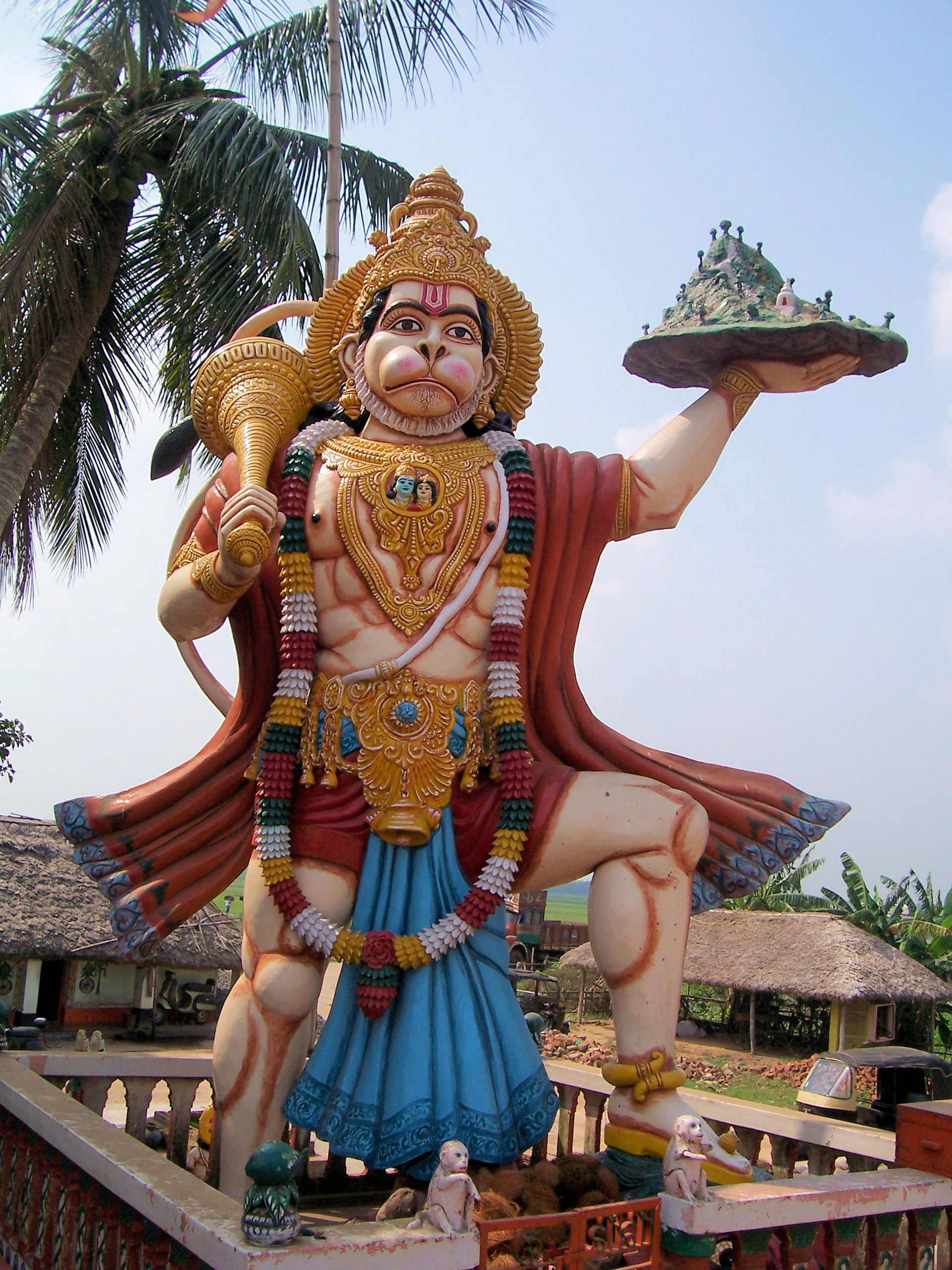
Statue of Hanuman in Haladiagada, Kendrapada, Orissa, India.

Photograph taken by Sujit Kumar (2007).
When Hanuman promised to remain on earth as long as Rama’s story was told, he didn’t expect it to be repeated quite so much. It took but a few years before he determined that the Ramayana would be told long after the Himalayas had crumbled into dust and India had sunk into the ocean. He wasn’t entirely enthusiastic about this. He enjoyed life but one can only eat so much fruit before getting sick of it. After several millennia, having exhausted whatever pleasures he could gain from food, he moved onto pranks and tricks. He would throw papayas, mangos, and pears at whoever happened to pass by.
One day, while lounging on a tree branch, Hanuman woke to the sound of footsteps. They were coming from down the path and getting louder. Through the foliage, Hanuman soon spied a hooded man making his way down the path. This traveler was muttering some prayer. Without hesitation, Hanuman picked up a half-eaten mango, aimed it at the man’s head, and threw it as hard as possible.
The mango hit its mark and the man let loose a flurry of expletives. Hanuman soon saw that this was a very old man with a long, gray beard. The monkey now felt some remorse at his actions. Had he known the passer-by was a decrepit old man, he would have thrown something smaller. Hanuman leapt down from the tree branch and went up to him to apologize.
Before Hanuman could speak, the man said to him, “Do you normally throw things at passers-by?”
Hanuman replied, “Living out here can get pretty boring.”
“I’m sure this is the best way to deal with it,” the man said sarcastically, rubbing the bump on his head. “Since you obviously don’t care much about your fellow creatures, I’m placing a curse on you. Maybe then you’ll stop throwing fruit at people’s heads.”
“Oh no. Please don’t!”
“Apparently, I have to. As you may have heard, there are brothers by the name of Pandava who have been wandering these parts for several years. You will remain in this very clearing until one of them should tug on your tail.”
“Great. At this rate, I’ll never leave earth.”
It dawned on the old man that he wasn’t talking to just any monkey. “You must be Hanuman! I’d love to hear of Rama and his great deeds.”
“I will, but only if you break that curse once I’m done telling the story.”
The old man was just about to reply when an enormous rakshasa ran into the clearing. Both Hanuman and the man were frightened. The old man, contrary to Hanuman’s preconceptions, hadn’t any magical powers. He was but a simple villager and nearly powerless against the demon. The rakshasa picked this old man up and swallowed him whole. Hanuman could hear the old man’s cries from inside the demon’s stomach.
“Help me! Help me!” the man cried.
Hanuman tried to leap back into the forest but the old man’s curse held and he couldn’t leave the clearing. He thought he would die. However, he soon realized the implications of his promise. If he was to remain on earth until the Ramayana was no longer told, he likely couldn’t be killed. And if he couldn’t leave the clearing, the rakshasa couldn’t take him away. Hanuman gathered up some of rocks nearby and began to toss them at the rakshasa. The demon seemed annoyed, but it didn’t go away. Hanuman realized that he would have to fight the demon barehanded. He punched, kicked, bit, and scratched the demon with all his might. The rakshasa soon swallowed him whole.
The inside of the demon’s stomach smelled of putrid meats of unknown origin.
“Disgusting!” cried Hanuman. He nearly retched.
From somewhere else in the stomach, he heard the old man cry, “Hanuman, is that you?”
“Old man?” Hanuman replied. “You’re still alive?”
“From what I could hear, you fought very bravely,” the man said.
“Thank you, but this fight isn’t over.”
The rakshasa tried to run back into the jungle but an enormous weight in its stomach stopped it. It couldn’t move out of the clearing. To add to the rakshasa’s troubles, Hanuman began to scrape and bite at the demon’s stomach. The monster made a horrible cry. Hanuman tore a hole in the stomach and all of its contents spilled out.
After giving the dead rakshasa a good kick in the head, the old man thanked Hanuman profusely. He said to the monkey, “Is there anything I can do for you?”
“Yes, lift this curse.”
“Oh, I’m sorry, but a curse can’t be lifted by the person who cast it. It will only be lifted until its terms have been fulfilled.”
“Great. Well, thanks. I guess you can go now.”
“I will still do something for you. I am a carpenter. I will build you a great house and there you will be able to move about as you wish. It’s the least I can do.”
The old man brought his sons and neighbors over to the clearing. There, they worked night and day to build Hanuman as elaborate a house as they could possibly build. Thus began a tradition among the local villagers to visit Hanuman each day and give him as many fine foods as he could eat. In turn, Hanuman told them the story of Rama, of the prince’s strength and of his wisdom. Hanuman eventually tired of the house. Hanuman appreciated the villagers’ attentions, but he soon tired of the house. Again and again he would try to find some way out of the clearing. He became extraordinarily sad. One day, while Hanuman sat in the middle of the road, contemplating all that had happened in his life, he felt a tug at his tail.
Author’s Note
Like some of my other stories, I decided to focus this narrative on someone who plays a rather minor role in the their epic. Hanuman is different, though, in that he plays a minor role in the Mahabharata but is very important in the Ramayana. In the Ramayana, Hanuman is important because he brings to Rama a mountain with magic herbs. These herbs help heal Rama’s soldiers. Without Hanuman’s help, it’s unlikely that Rama would have been able to defeat Ravana.
Hanuman has a rather distinct personality. He is known as a trickster. When he was a child, Hanuman tended to mess with those sages who lived in the forest. While I didn’t know about his reputation as a trickster prior to writing my story, it now seems only natural that he should while away the hours by tossing fruit at passers-by.
Of course, this story isn’t set just within the timeframe of the Mahabharata. It spans that time period from shortly after the events of the Ramayana to Bhima’s time in the forest. I thought that it would be interesting to provide some information about how Hanuman spent that time between the two epics.
Bibliography
Quora. “What fruit grows in India?”
Various authors. The Mahabharata (public domain).
Various authors. The Ramayana (public domain).
Wikipedia. "Hanuman"
Wednesday, September 28, 2016
The Celestial Weapons
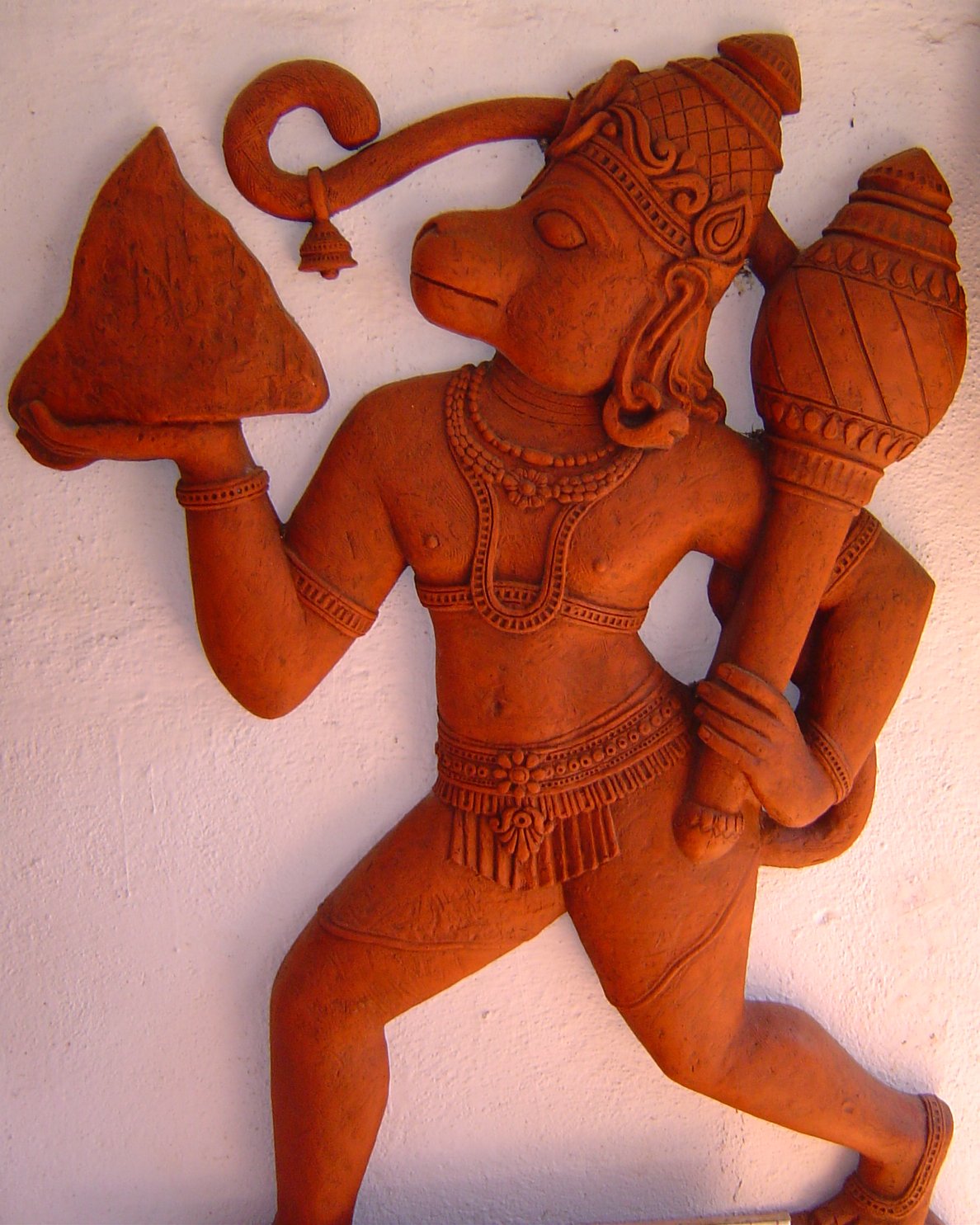

Terracotta sculpture (n.d.).
Once upon a time, the great warrior-prince Rama defeated an enormous horde of rakshasas, led by Subahu and Maricha. The battle was fierce, but with the help of celestial weapons called down by the sage Vishwamitra, Rama vanquished the demons. Rama soon faced another problem, one that was more suitable to a king: jealousy and intrigue.
Once they had returned to their celestial sphere, the weapons rejoiced at the victory over the rakshasas. They hadn’t seen a battle in a thousand years. They were glad to finally defeat evil beings and to serve a great warrior. That is, most of them rejoiced. Several of them felt as though Rama hadn’t given them enough credit for their valor. The most vocal among these was the chakram, a circular blade who could cut through anything. Rama had used him during most of the battle and this weapon was jealous when he saw the other weapons praising Rama only. He took some of his closest friends to a private spot and told them his concerns. He spoke to them of how he had risked being captured or shattered by the rakshasas.
"Every time Rama threw me at those demons,” the chakram explained, “I was risking my own death and destruction.”
The other weapons were wary at first but, after a persuasive speech, they began to agree with the chakram’s point: that Rama hadn’t given them as much credit as they deserved for helping to defeat the rakshasas.
The chakram called together a meeting of all of the weapons. They were confused as to why the chakram would call a meeting. He was generally standoffish and rarely spoke to any who wasn’t his friend. Even then, he spoke without manners and was wont to use uncouth words.
The chakram rattled himself against his best friend the gada, a mace of immense weight, and so called the meeting to order.
"I have some serious concerns about how Rama is treating us. To put it bluntly, I'm not sure he's giving us the proper credit for our bravery. We were actually the ones who killed the rakshasas. Rama only aimed us. He only pointed us in the direction of the rakshasas."
The bichuwa, a dagger so sharp it could cut mountains in half, grumbled at this. He replied, "But Rama is a brave and clever warrior. Surely we must give him most of the credit. We are, as we promised him, but tools to defeat evil. Are you not happy, O chakram, about our destroying evil, or would you rather have rakshasas overrunning every place on earth?”
This infuriated the chakram, who replied, "I never said that I wanted the rakshasas to overrun the world. You’re putting words in my mouth. Of course I'm happy that there are fewer rakshasas.” The chakram spent a minute or so regaining his composure. Resuming his speech, he said, "What we are discussing is whether Rama deserves all this praise. Metaphorically speaking, I believe that he is simply the ship at sea, while we are the wind that pushes him. Without us, Rama wouldn’t go anywhere."
From the crowd, the pasha, a lasso as strong as diamond and as flexible as a snake, shouted, "But where would the wind be without the ship? It wouldn’t have anyone to help. All it would do is stir up the ocean. How useless the wind would be!"
The gada, who stood beside the chakram, said, "It would help birds fly!" The gada struggled to make itself heard above an audience which was growing increasingly restless.
After some time, the chakram managed to gain control of the meeting. "Let's get back on track. When has Rama ever thanked us for saving his life? When has he ever acknowledged how vital we are to his mission?"
The pasha said, "Why should he thank us? If anything, it is us who should be thanking him! Without Rama, we would never achieve glory in battle. Without Rama, we could never help create history!"
The chakram, infuriated, said, “Let’s go ask Rama what he thinks. If you think he’s so great, he should be able to provide the correct answer to this problem.”
“Fine. Let’s go.”
All of the weapons rushed down to earth. Rama had only just woken up and was confused to see all of the weapons gathered around him. I must have summoned them in my sleep, he thought.
“Glorious Rama,” said the bichuwa, “we have come to ask you an important question about yesterday’s battle: Who deserves the glory of having defeated so many rakshasas?”
Rama replied succinctly. “Everyone.”
“Everyone?” asked the chakram.
Rama responded, facing each weapon in turn, “I could not have won without you, my strong celestial weapons. We all played a vital role in defeating that horde of rakshasas. We each have our place; we do not have a choice in our position. Dharma is not to be changed by man or weapon. We must accept it as it is. Be happy that you and I have been granted such esteemed roles.”
The weapons were all impressed by Rama. He wasn’t yet king, but he was already wise. Having realized the importance of their positions and having learned of Rama’s gratitude, the weapons returned to their celestial sphere. They rejoiced in their victory over the rakshasas and in their high positions.
Author's Note
In this story, I sought to provide the perspective of some characters who didn’t consider Rama in a perfectly positive light. The likelihood that every good person would exalt Rama is unlikely. There are probably a few moral people (in other words, people who aren’t rakshasas) who have some reasonable issues with him. By using celestial weapons as those characters who weren’t entirely enthusiastic about Rama, I was able to show how beings of all ranks and positions could have conflicting opinions.
In addition, I wanted to present a story that wouldn’t receive any attention otherwise. While Rama is certainly the main character of the Ramayana, he isn’t the only one with a complex life. Those he happens to meet or work with for a short time have lives of their own (sometimes thousands of years long).
In the most recent revision, I elaborated somewhat on the exact issues that the chakram has with Rama. The chakram is doing more than whining. He actually went through dangerous circumstances in order to help defeat the rakshasas. I also added a part about how those who opposed chakram’s view talked among themselves and came to reconcile their own opinions with his. In this way, the weapons have a more complex debate. They reason their way towards a compromise between the weapons’ varying views.
Bibliography
Subscribe to:
Posts (Atom)