Showing posts with label Week 2. Show all posts

Sunday, September 4, 2016

Feedback Thoughts

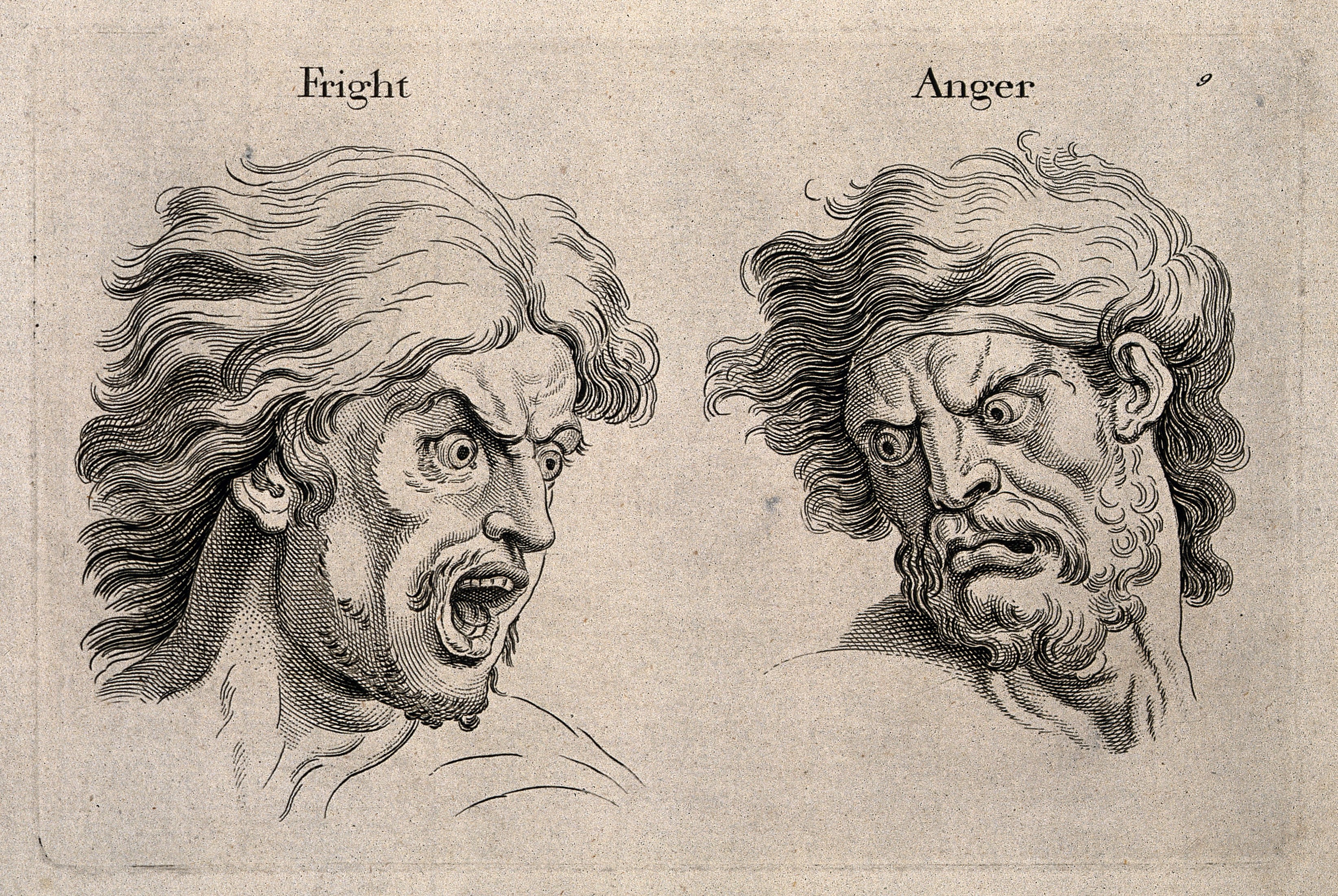
An engraving of a frightened man and an angry man. 
Engraving C. Le Brun, c. 1760. Link.


One of the key problems in receiving feedback is the consideration of any comments that are not 100 percent positive as personal attacks. People tend to put a lot of stock in their ideas and so have their own pride bound up in them. Of course, I'm not immune to this. I'm still in the process of growing a thicker skin and thinking of constructive criticism as just that: constructive. This will probably always be an ongoing process. I can't imagine ever taking constructive criticism completely impersonally.

When it comes to taking criticism, we do need to consider the fact that few people truly want to destroy our self-value or cause us harm. In all likelihood, they only want to help us improve, especially if they're fellow students or friends. Guy Winch makes an important point about stressing our own value in the face of criticism. While we may need to improve in some area, it doesn't mean that we're failures in everything. Everyone can improve in some area, even if they're considered the best at it. Criticism may not be fun to receive, but it provides more insight into how we can develop. If the criticism is purely negative, we can learn how not to criticize a person's efforts.

As the Impraise article and Carol Dweck have said, a good, healthy reception of criticism requires a growth mindset. By thinking of one's self as a static creature, incapable of improving and always harboring the same weaknesses or strengths, we limit our belief in ourselves. I had never considered the link between this belief in stability of abilities and the tendency to take constructive criticism in either a positive or negative manner. Now, it seems only natural that we should consider ourselves as constantly developing and so take constructive criticism, and even less friendly criticism, as an opportunity to reflect on where we stand in our development, where we've been, and where we want to go.

Here are a couple of my tips for accepting criticism and using it in a helpful manner:

1. Don't think that whatever abilities you hold now will never improve. I've often found myself guilty of thinking that I would never improve in some subject. If you think your skill is forever set at a certain level, criticism takes on a more negative and personal appearance, even if the person only wants to help you improve.

2. Whether it's well-stated or poorly stated, consider the criticism. Criticism, toxic or constructive, can help you learn how to criticize others. Of course, you don't want to tell someone something like "This is completely terrible." If you do receive criticism like this, your probable emotional pain (however mild) can tell you how less than constructive criticism will be taken by other people.

3. When criticizing other people, make sure that you mention what you like about their work, lest they think you dislike all of it. It's important for those being criticized know that there is at least one thing they did right and that they have the ability to improve it. Failing to mention any positive aspects could lead to their becoming defensive and so unwilling to listen or accept any criticism.


Bibliography

Impraise. "Overcoming the fear of feedback."
Link: http://blog.impraise.com/360-feedback/overcoming-the-fear-of-feedback-performance-review

Winch, Guy. "Why rejection hurts so much — and what to do about it." Link: http://ideas.ted.com/why-rejection-hurts-so-much-and-what-to-do-about-it/?utm_campaign=social


Tuesday, August 30, 2016

Story: The Celestial Weapons Recognized

https://upload.wikimedia.org/wikipedia/commons/a/ac/Rama_launched_at_his_foe_a_fearsome_a_bolt.jpg
Rama fires an arrow at a foe. Illustration by Evelyn Paul (1911).
Originally published in Stories of India's Gods and Heroes (1911). Source: Wikimedia Commons


After winning a fight against rakshasas, Rama was confronted with a problem that would prove fitting of a king: the jealousies and intrigues of his subjects.

It wasn't long after the celestial weapons had been called down to help Rama kill a band of rakshasas, led by Subahu and Maricha, that the spear, perhaps the strongest among them, made his concerns known. He called together a meeting between all of the weapons. None of them were entirely sure what to make of this. They had never had a meeting before, only having existed for several thousand years (a thousand years seeming like mere seconds to any supernatural being).

"I'm not sure Rama is giving us the proper credit for our bravery. We are the ones who killed the rakshasas. Rama only aimed us where we needed to go."

To this, the saber replied, "But Rama is a brave and clever warrior. Surely he is doing the work. We are, as we promised, but tools in the defeat of evil. Are you not happy, spear, about our defeating evil? Would you rather have rakshasas running around everywhere? Do you know how terrible this world would be?"

At this, a few of the other weapons applauded and shouted their approval. This reception only infuriated spear.

"I never said that I wanted the rakshasas to run free," the spear retorted. "You've mischaracterized my argument." A few more claps came from the crowd, these weapons having changed their minds on the subject at hand. "Of course I'm happy that there are fewer rakshasas. Whether we support the rakshasas' war of independence is another matter entirely."

Few among the weapons were in favor of such independence. Only the most radical among them supported rakshasa self-determination and even they were reticent to voice their support in front of so pro-Rama a crowd.

"What we are discussing is whether Rama deserves all this praise. I believe that he is simply the ship at sea, while we are the wind that pushes him. Without us, Rama would go nowhere."

"Yes," cried the staff, "but where would the wind be without the ship? All it would have to brush against are trees and bushes. How useless the wind would be!"

The mace, who was close friends with the spear, shouted, "It would scatter the seeds of plants and help to grow forests!" The mace struggled to make itself heard above an audience which had grown restless.

After some time, the spear managed to gain control of the meeting again. "Let's get back on track. When has Rama ever thanked us for saving his life? When has he ever acknowledged how vital we are to his mission?"

The saber said, "Why should he thank us? If anything, it is us who should be thanking him! Without Rama, we would never achieve glory in battle. Without Rama, we could never help create history!"

The mace whispered to the spear, "He's right, spear. Without Rama, we couldn't even consider ourselves true warriors."

The spear reluctantly agreed. He knew that, if it weren't for Rama, nothing would have happened. They would never have become part of the Ramayana, an epic of which Brahma had recently told them.

The spear turned to the crowd and said grudgingly, "This is true. We need Rama."

The weapons sent an envoy, the mace, to earth. There, it spoke to Rama.

"Blessed Rama, we wish to thank you for helping us achieve glory in both worlds. You are a courageous fighter and we are proud of having helped slain so many rakshasas."

Rama, courteous and honest as ever, replied, "I could not have won without you, my strong celestial weapons. We have all played a vital role in defeating the horde of rakshasas. Just as a flower cannot live without the bee, I cannot win without these weapons."

The envoy returned to the celestial weapons and told them what Rama had said. The weapons rejoiced in the knowledge that, not only had they played an essential role in the battle, but that Rama, prince and future king, had praised them so highly. They expected much good to come of this partnership.


Author's Note

The weapons, when called down by Vishwamitra, proclaim loyalty to Rama and pledge to help him whenever he needs them. Given this pledge of loyalty, it seems likely that the weapons have some thoughts of their own. I thought that it would be interesting to show some characters who, rather than simply adoring Rama or fervently hating, hold mixed feelings concerning him. It seems only natural that at least one of those beings (be it a man or a celestial sword) would be jealous or feel as though they weren't given enough credit. It's clear that the epic centers around Rama's exploits. By writing from the perspective of the celestial weapons, I've provided, not exactly a backstory, but an elaboration of those events surrounding Rama during his adventures. The reference to the rakshasas' war of independence suggests a more complex supernatural history. They are more than just evil demons.


Bibliography

Various authors. Ramayana (public domain). Source.

Sunday, August 28, 2016

Reading Notes: PDE Ramayana, Part B


Ravana fighting with Jataya. Originally published in Myths of the Hindus & Buddhists (1914).
Illustration by K. Venkatappa. Source: Wikimedia Commons

Section 21. Bharata Returns
Rama must have had a great deal of influence on his brothers while they were young. What are some incidents that could have occurred during their childhood that would make Bharata look up to and obey Rama? Something more than rank or seniority has influenced him.

Section 23. Rama and Bharata
Rama has thoroughly accepted his destiny. He is strong-willed and refuses the position that would give him power. How would Rama have seemed to his subjects if he had followed Jabali's advice?

Section 29. Lakshmana
Rama just can't catch a break. How is Rama able to defeat every single foe? He seems to have super strength. What if Rama was an out-and-out superhero bitten by, say, a magic elephant? Perhaps an origin story concerning Rama's superhuman strength.

Section 30. Battle with Khara
At this point, Rama's adventures seem a lot like the Labors of Heracles.

Section 31. Ravana
Rama's enemies become ever stronger. How would Rama have fared if all of the evil deities had fought him at one time?

Section 38. Rama and Jatayu
Rama's life centers around his wife, Sita. How would the story have gone if Lakshmana had stayed with Sita? Would the demon have kidnapped her anyway?


Bibliography

Various authors. Ramayana (public domain). Source.

Reading Notes: PDE Ramayana, Part A


Crossing the Ganges. Rama and Lakshmana prior to meeting Visvamitra
Illustration originally published in Udaipur, 1712. Source: Wikimedia Commons

Section 1. King Dasharatha
Lonely heights: In the midst of the happiness and prosperity of his subjects, King Dasharatha lacks the former. What other thoughts could be going through an heir-less king's mind?

Section 2. Dasharatha's Sons
Reliance on the gods: Rather than relying on his own initiative, the king calls upon forces even greater than he is (gods and, perhaps, luck) to ensure that his dynasty survives via a male heir. This could represent the reliance that humans (even the most powerful among them) must live with the will of the gods. For his admittance of reliance, his wish is granted fourfold. Is this a reward for so humbling himself before the gods?

Section 3. Rama: Avatar of Vishnu
Vishnu at once grants Dasharatha his wish and helps his fellow deities. Thus, Vishnu and perhaps the other gods are not completely selfless beings. One could say that Vishnu took advantage of Dasharatha in his time of need by giving him, not sons, but rather four incarnations of Vishnu. One question which immediately comes to mind is whether Vashishtha knows that the son is the avatar (or one of four avatars) of Vishnu.

Section 4. Vishvamitra
The king is generous, but perhaps too much so. He unwittingly promises to send his son into battle against wicked deities. The desires of the king are thus made subservient to outside forces. As wise as he may be, or as wise as the counsel of Vashishtha may be, he is unable to rule his kingdom absolutely.

Section 5. Thataka
Rama is a capable and clever warrior, both of which are qualities required of a king. He now has celestial weapons and abilities at his beck and call. To what extent do these weapons cause his victories? Is he the primary cause of his victories or are the supernatural forces? How do the supernatural forces feel at having Rama be honored by humans?

Section 6.  Bhagiratha and Ganga
Power and other good things are brought to humans via self-sacrifice. The fact that self-sacrifice and self-imposed austerity are rewarded indicates a more collectivist society. Western European culture is more individualistic (though not without collectivism) but these types of behaviors are still held in high esteem. What would happen to the kingdom if they refused to sacrifice for the deities?

Section 7. Ahalya
Disloyalty to one's husband and one's family is met with severe punishments. What if his wife had held more power? How would that have played out?

10. Rama Wins Sita
The test of physical strength is similar to King Arthur and the sword in the stone. It's not surprising that two cultures whose survival depends on military prowess should hold physical strength in high esteem. What sort of challenge would be given if cleverness had been stressed more?

Section 11. Rama the Heir Apparent
Rama seems destined to become king. Why is victory in war mentioned as one of his positive traits but not a preference towards diplomacy? What would have happened if, among the advisors, there had been some who wished to install another leader? Would the king have supported any other candidate for his successor had they thought Rama unworthy?

Section 14. Manthara and Kaikeyi
Bharata's physical ugliness (suggested obesity, infertility, and unsightly physical proportions) indicates an internal ugliness. Like European fairytales, the physically beautiful are typically the "good guys." This is likely indicative of the Indian upper-class attitude towards the Untouchables. Wretched and dirty, they're ostracized by those classes who live in relative luxury.
Past, yet unfulfilled promises are extremely important.

Section 15. Kaikeyi and Dasharatha
Dasharatha follows through on his promise even though he thinks it will bring ruin to the kingdom. Shame and social ostracism are important aspects of the king's decision. Thus, perceived honor supersedes political stability. Why would the king let his natural successor be betrayed? What would the gods think? Would they support the fulfillment of promises over the wiser choice of king?


Bibliography

Various authors. Ramayana (public domain). Source.