Showing posts with label Week 13. Show all posts

Wednesday, November 16, 2016

Story: The Dullard

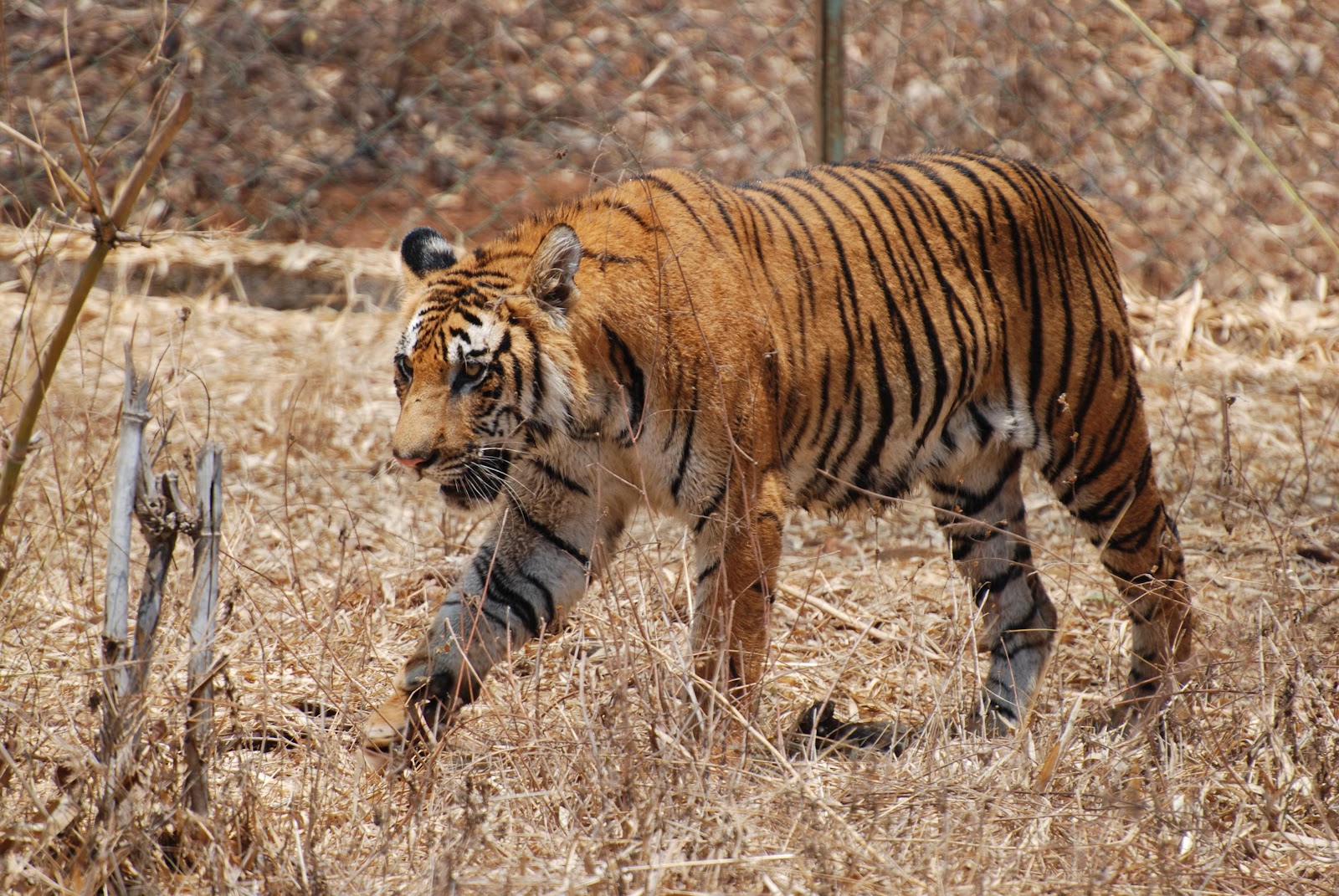
Bengal_Tiger_Karnataka.jpg
A Bengal tiger in India.
Photograph by Paul Mannix (2009).

The Dullard

Many years ago, there once was group of three brahmans. They had each lived in the forest for seven years. During those seven years, they had become knowledgeable in matters related to karma, to dharma, and to all of the underlying truths of life.
Although these three brahmans had lived together for seven years, one of them had always remained an outsider. They called him “the dullard.” They had only let him into their group because they pitied him. They thought him incredibly dull.
One day, the brahman agreed that it was time to leave the forest. They had learned a great deal during their isolation. They thought they could make great use of it by buying and selling goods. They could become some of the wealthiest merchants in the kingdom and, perhaps, gain positions in the king’s court.
Of course, the smarter two didn’t think the dullard would amount to much. Even so, they let him go. It would certainly be funny to see him prove a terrible merchant. In all likelihood, he would lose all that he had within a week.
The three brahmans packed up their few belongings and headed out of the forest. Along the way, they came across a skeleton. The wisest brahman looked closely at the skeleton.
“Why, this is the skeleton of a tiger!”
“How odd,” said the second wisest brahman. “You know what we should do?”
“What?”
“We should bring it back to life. We’ve learned so much in our seven years in the forest. We should able to do that.”
“That sounds a good idea,” said the wisest brahman.
But the dullard disagreed. He said to the two other brahman, “It’s a tiger! If we bring it back to life, it’ll eat all of us!”
The other brahmans laughed at him. “Why would it eat us? Wouldn’t it know a brahman when it saw one? We all know that tigers don’t eat brahmans.”
At this, the wisest brahman used his powers to put muscle and skin back on the tiger’s bones. Then, the second wisest brahman breathed into its mouth in order to restore it to life.
“Ah,” he said. “We are able to bring the dead back to life! Forget being merchants. With those power, we could become kings over all of India!”
Before the brahman could finish his sentence, the tiger leapt at him. The beast tore at him with her claws and soon he was just a bloody pile. The dullard leapt into a tree, where he hoped the tiger wouldn’t be able to get him. Meanwhile, the wisest brahman was trying to calm down the tiger.
“We have brought you back to life, oh tiger! Surely you should be thanking us, not eating us!”
The tiger attacked this brahman too and made a meal of him. The dullard remained in his tree until the tiger had gone away.
Moral: A man with wisdom but no common sense is like a palace with art but no furniture.


Author’s Note

In this story, I adapted a tale told in an Amar Chitra Katha comic book, “The Dullard.” In this tale, a group of wandering brahman bring a lion back to life, only to have it attack them. The dullard of  the group is the only one who survives. He warned them, but they didn’t listen. My story is a pretty close adaptations of the original. I may eventually add another passage or a sequel about how the dullard came to be one of the most revered men in the kingdom.


Bibliography

The Dullard. Amar Chitra Katha, v. 585.


Monday, November 14, 2016

Reading Notes: The Dullard (Tuesday)

Herpestes_edwardsii_at_Hyderaba.jpg
Photograph by J.M. Garg (2008).


The Dullard
  1. Each of the brahmans look comical. Exaggerated features seem to be a common characteristic of villains or antagonists in these comic books, while beauty is the mark of heroes (e.g. Rama and Sita).
  2. Now that the dullard is allowed to go on the journey, the person who invited him is likely to be punished greatly or rewarded greatly. My guess is that he’ll be punished, since he’s allowing someone to go along who might not deserve it.
  3. This story got really grim really fast. The dullard actually proved to be more clear-headed than the other brahman. It’s unfortunate that he’s now alone because of his friends’ stupidity. How would he go about his life from then on?

The Greedy Barber
  1. Riches are the only thing keeping Manibhadra the merchant’s friends around. Are they not the greedy ones?
  2. The barber takes the exception for the rule. He thinks that since his friend found extraordinary wealth, he will too.
  3. The barber is punished for not knowing the full story.

The Mongoose and the Brahman’s Wife
  1. Like the greedy barber, the wife in this story acts before knowing the full story.
  2. For this, she is punished by losing the mongoose who saved her son.

The Wheel-Bearer
  1. This story seems rather unfair. The fourth man is punished for seeking more than gold. The other men are rewarded for their efforts. It seems only logical that after the other men find a number of precious metals, that he would search for gems.

Ekabuddhi
  1. The fish are too confident in their own powers. They’ll likely come to a bad end.
  2. Although the frogs may not consider themselves particularly tricky, they manage to escape the fishermen and a bad fate.

The Lazy Brahman
  1. That brahman expects far too much from the pot of flour.
  2. How would the lazy brahman have fared if he hadn’t kicked over that pot of flour?


Bibliography


The Dullard. Amar Chitra Katha, v. 585.
Reading Notes: Elephant Stories (Monday)

Two-Elephants.JPG
Two Asian elephants in Tamil Nadu, India.
Photograph by Mohan Raj (2010)


The Greedy Forester
  1. The white elephant’s sensitivity will likely come in handy. He may even wind up saving his elephant brethren, despite the latter’s cruelty.
  2. The white elephant is completely selfless. He only seems to want to help others.
  3. This story is somewhat like The Giving Tree. While the forester does get what he wants in the beginning, his exploitation of the elephant eventually gets him nothing. In fact, he’s punished for this exploitation.

The Brave Quail
  1. This story is incredibly violent. First, a baby bird’s head is trampled off by an elephant. Then, a crow pecks out the eyes of that elephant. Then, an ant lays its eggs in the empty eye sockets of the elephant.
  2. I guess the elephant got exactly what is deserved.

The Royal Elephant
  1. The elephant shows loyalty in every circumstance. He also risks his own life for the sake of the kingdom and for his prince. For this, he’s respected by everyone.


Bibliography

Elephant Stories. Amar Chitra Katha, v. 554.